

Feb 26, 2022
Sapona Shipwreck
Sapona Shipwreck — Exploring a Concrete Relic in the Bahamian Waters
As a photographer with a penchant for the whispers of history and the allure of nature, my journey to the Sapona Shipwreck was more than a photographic expedition; it was a voyage through time. Nestled in the waters near Bimini in the Bahamas, the Sapona’s story is a captivating blend of history and natural wonder. Its proximity to Florida makes it a popular destination for Florida boaters and divers seeking adventure and exploration.
The Birth of the Sapona
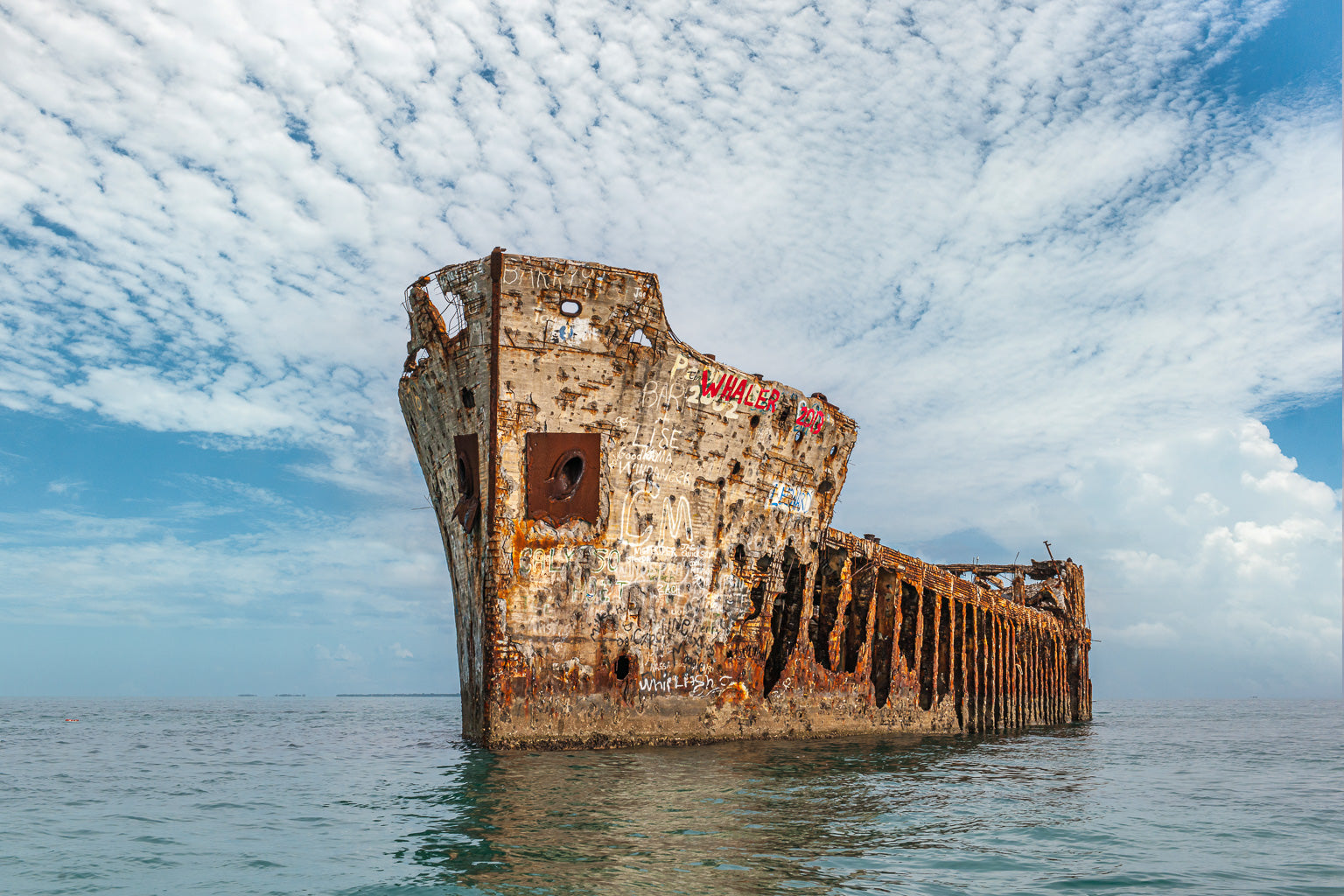
The tale of Sapona begins against the backdrop of World War I (WWI), an era of innovation driven by necessity. With steel in short supply, the U.S. government, under the leadership of President Woodrow Wilson, turned to alternative materials, leading to the creation of the Sapona using ferrocement. The developers involved in its construction were tasked with meeting wartime demands, reflecting the broader context of WWI shipbuilding. Initially envisioned as a troop transport, the ship’s destiny was rerouted by the war’s end, marking the beginning of its varied and colourful history.
Post-War Transformations
In the hands of Carl Fisher, an entrepreneur who played a crucial role in developing Miami Beach, the Sapona embarked on a new journey. It mirrored the economic shifts of the post-war era, serving variously as a casino and an oil storage facility. After its initial service, the Sapona was sold for scrap and changed hands multiple times, reflecting its evolving role and value. However, the most intriguing phase of its life began with the Prohibition era in the United States.
Just beyond the wreckage and rust, the Bahamas has a softer, stranger side—like pigs that paddle right up to your boat. Read about my visit to Pig Beach here.
The Prohibition Era and A Dream Unfulfilled
Bruce Bethel’s vision to transform the Sapona into a floating nightclub was a creative response to Prohibition’s restrictions on alcohol. The ship was also used to store liquor as a floating warehouse during this period. This dream, however, was short-lived. A devastating hurricane in 1926 battered the ship, and the ship ran aground near Bimini. This dramatic turn of events marked the end of its life as a mobile vessel and set the stage for its final chapter as a shipwreck.
A World War II Relic and a Bermuda Triangle Enigma
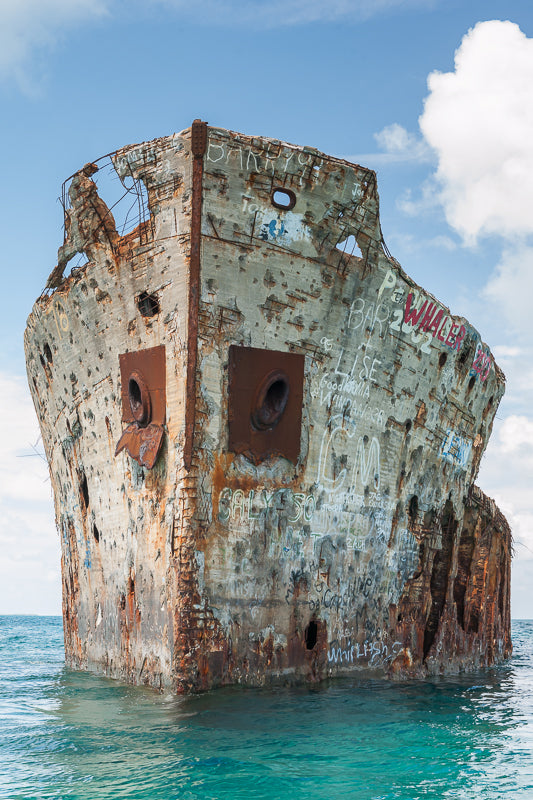
The Sapona Shipwreck’s story took another turn during World War II. The ship found a new purpose as a target practice site for U.S. bombers, preparing for aerial combat. This period of history is linked to the enigmatic Bermuda Triangle, particularly with the disappearance of Flight 19 on December 5, 1945. This mysterious event halted target practice on the ship and has fueled the legend of this infamous region.
The Sapona Today: An Underwater Haven
The Sapona rests in the shallow waters of Bimini, a semi-submerged testament to its storied past. The ocean setting around the wreck creates a vibrant marine habitat, enhancing the diving experience for visitors. It has evolved into a vibrant ecosystem, supporting a diverse array of marine life. Its structure, encrusted with coral, creates a unique underwater landscape that’s both a haven for aquatic creatures and a paradise for photographers. The shipwreck has spent decades underwater, adding to its mystique and allure for divers and history enthusiasts.

A Photographer’s Perspective
Capturing the essence of the Sapona Shipwreck was a challenge and a privilege. The interplay of light, shadow, and marine life around the wreck created a surreal environment ideal for compelling underwater photography. I invite readers to join a Sapona photography challenge and share their images or stories of the wreck. Each dive brought discoveries, as divers and explorers searched for unique perspectives and marine life around the ship, from the vibrant colours of tropical fish to the intricate patterns of coral growth on the ship’s concrete hull.
Visiting the Sapona: Tips and Insights
For those drawn to explore this underwater marvel, Bimini is the gateway to this historical treasure. Easily accessible from Miami, whether by air or sea, the journey is part of the adventure. Local tour operators offer valuable insights and the necessary equipment for a safe and enriching experience. The best times to visit are between late spring and early fall, when the weather and water conditions are most favourable for diving and snorkelling. In February, water temperatures can be surprisingly cold, making the diving experience more intense and requiring proper preparation. The unique setting of the shipwreck, surrounded by clear waters and abundant marine life, adds to its appeal for visitors seeking both history and adventure.
The Legacy of the Sapona
Reflecting on my experiences with the Sapona, it symbolizes human ingenuity, resilience, and the relentless march of time. From its inception as a wartime invention, through its various post-war incarnations, to its ultimate role as a sanctuary for marine life, the Sapona’s journey is a microcosm of the tumultuous history of the 20th century. Its remains, resting in the Bahamian waters, continue to fascinate and inspire, offering a poignant reminder of the ever-changing nature of our world.
History and Significance
The SS Sapona shipwreck stands as a remarkable testament to the ingenuity and adaptability of its era. Born from the challenges of World War I, the Sapona was one of several concrete ships commissioned by President Woodrow Wilson when steel was in short supply. Constructed by the Liberty Shipbuilding Company in Wilmington, North Carolina, and inspired by the innovative spirit of Henry Ford, the Sapona was designed to transport troops across the Atlantic as part of a larger fleet. However, the war ended before the ship could be completed, leaving its original purpose unfulfilled.
From sunken ships to unexpected animal encounters, I’ve seen a lot out there. Dive into more of my travel stories here.
The end of the war marked the beginning of a new chapter for the Sapona. During the Prohibition Era, the ship’s concrete hull became a floating warehouse, storing and distributing liquor just off the coast of South Bimini. Bruce Bethell, famously known as the “Rum King of Bimini,” used the Sapona as a base for his thriving liquor business, cementing its place in the colourful history of the region. The ship’s story didn’t end there; during World War II, the SS Sapona was repurposed as a target for bombing practice by U.S. fighter planes, further embedding it in the annals of military history.
After a hurricane in 1926 ran the Sapona aground, it became a permanent fixture in the shallow waters near Bimini. Today, its weathered concrete hull serves as a navigational landmark for boaters and a magnet for divers from around the world. The surrounding area teems with tropical fish and vibrant coral, making the SS Sapona not only a relic of the past but also a living part of Bimini’s marine ecosystem.
Diving and Exploration
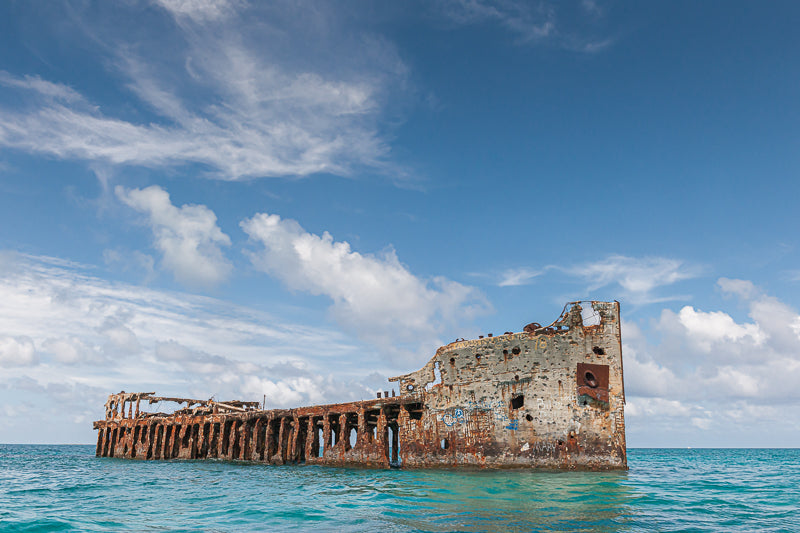
Diving the SS Sapona shipwreck is an adventure that blends history with the natural beauty of the Bahamas. Just off the coast of South Bimini, the wreck rests in about 15 feet of crystal-clear water, making it accessible to both novice and experienced divers. Under the blue skies, the Sapona’s concrete hull—scarred by decades of weathering and the impact of bombing practice—rises above the waterline, inviting exploration.
As you descend, the ship’s worn structure reveals a thriving underwater world. Schools of tropical fish dart through the open spaces, weaving between remnants of the ship’s past. The deck, still standing about 40 feet above the water, offers a unique vantage point for those who climb up for a panoramic view of the surrounding area. Inside the wreck, divers can swim through the open hull, discovering pockets of coral and glimpses of the ship’s storied history.
Sapona’s shallow depth and calm waters make it an ideal site for snorkelling, allowing visitors to experience the vibrant marine life and the ship’s haunting beauty without the need for advanced diving skills. Each visit is a journey through time, where the echoes of the Prohibition Era, the legacy of two world wars, and the wonders of the Bahamian sea come together in a single, unforgettable dive.
Preservation and Legacy
Preserving the SS Sapona shipwreck is essential to safeguarding both its historical significance and its role as a thriving marine habitat. As one of the few remaining concrete ships from the World War I era, the Sapona is a tangible link to a pivotal moment in maritime history. Its later use as a bombing target during World War II and its colourful past during the Prohibition Era add layers to its legacy, making it a site of enduring fascination for historians, divers, and boaters alike.
Some trips are about the destination—others are about the road itself. See the travel quotes that have fueled my own journeys.
Efforts to protect the Sapona and its surrounding ecosystem are vital for ensuring that future generations can continue to explore and learn from this unique shipwreck. The wreck’s visibility above the waterline makes it a prominent navigational landmark, while its status as an artificial reef supports a diverse array of tropical fish and coral. By maintaining the integrity of the concrete hull and promoting responsible diving practices, we help preserve the delicate balance between history and nature that defines the Sapona.
The story of the SS Sapona, from its construction by the Liberty Ship Building Company to its current role as a beloved dive site in the Bahamas, is a powerful reminder of the importance of maritime heritage. As visitors from around the world come to swim, dive, and marvel at the wreck, the Sapona continues to inspire awe and curiosity—its legacy weathered but enduring, much like the ship itself.


